




- 30 Day Refund Policy
- Free Domain, Free SSL, Free CDN
- Support available 24/7/365 via Phone, Chat, Knowledge Base and Blog

- 90-Day money-back guarantee
- Free SSL, Premium malware and Hack protection
- Support available 24/7/365 via Chat, Phone, Email, Tickets and Knowledge Base
Bluehost vs InMotion: Quick Summary
Both Bluehost and InMotion offer solid hosting options, but they’re designed for slightly different types of users.
Bluehost takes the lead overall with faster speeds, easier setup, and smoother WordPress integration. It’s a great choice for beginners and growing sites that want reliable performance without extra setup hassle.
InMotion, on the other hand, stands out for its strong built-in security, generous resources, and flexible control panel options. It’s ideal for users who want more control or plan to host multiple websites on a budget.
Not sure which one is better for you? Let’s dive into the details to see how they compare.
Bluehost vs InMotion: Overview
Bluehost and InMotion Hosting are both popular options with plenty of features, but they focus on different types of users and priorities.
Bluehost Profile
Bluehost has been around since 2003 and now powers millions of websites. It offers everything from shared and WordPress hosting to VPS and dedicated servers.
You’ll also find domain registration, business email, and easy site-building tools. Known for strong WordPress.org endorsement, fast support, and solid features, it’s a popular pick, especially for first-time users, thanks to its discounts.
InMotion Profile
InMotion Hosting is a cloud-based provider known for reliable, high-performance hosting. It offers shared, WordPress, VPS, and dedicated plans for both personal and business use.
It has solid global coverage with data centers in the U.S. and the Netherlands. Key highlights include 24/7 support, budget-friendly pricing, and strong support for platforms like WordPress and Drupal.
1. Hosting Features and Services Comparison
Bluehost and InMotion each bring their own set of features and perks to fit different hosting needs.
Bluehost Features
Bluehost works well for everything from simple blogs to more advanced WordPress sites. Storage starts at 10GB SSD on the BASIC plan and goes up to 225GB with the new CLOUD hosting option.
All plans include a free CDN, a domain for the first year, a free trial of the professional email service, custom WordPress themes, and an SSL Certificate (also for the first year). Still, phone support, daily backups, and domain privacy aren’t included with the BASIC plan, and e-commerce tools are limited to the ONLINE STORE plan.
The good news? You only pay for what you actually need. Smaller sites can stick with BASIC or CHOICE PLUS, while online stores or larger WordPress sites should go for the ONLINE STORE or CLOUD plans.
InMotion Features
InMotion includes unlimited bandwidth and SSD storage on all plans, except the Core plan, which is capped at 100GB and doesn’t come with a free domain.
Every plan offers free perks like SSL, automatic backups, marketing tools, a website builder, and live chat support. Phone support and advanced caching are available on the Power and Pro plans, and performance improves as you move up the tiers.
The Core plan still covers a lot for basic blogs or small WordPress sites, including 10 email accounts, security tools, DDoS protection, your choice of data center, and developer support for Python, Node.js, Ruby, and Git. It supports just two websites, but the Launch plan allows up to 25, while the Power and Pro plans support unlimited sites.
All plans let you choose a data center in the U.S. or Europe.
2. Prices and Plans Comparison
Shared Hosting
These plans work well for business sites, personal blogs, and online stores. The top-tier options are great for resource-heavy sites that don’t need VPS hosting. They’re user-friendly and reasonably priced overall.
VPS Hosting
These plans are a good fit for websites and products that need security, customizability, and performance. They are in the middle ground for ease of use and pricing.
Dedicated Hosting
These plans deliver top-notch performance, security, and customization, but they’re the least beginner-friendly and come at a higher price point.
Bluehost Pricing Plans
Bluehost plans begin at $2.49/mo on the entry-level shared hosting plan and go up to $267.66/mo on the dedicated server plans.
- Shared/WordPress hosting: Bluehost’s shared hosting and WordPress hosting plans are similarly priced. They start at $2.49/mo and go up to $9.99/mo.
- VPS: Bluehost VPS plans start at $40.29/mo and max out at $81.44/mo for first-time customers.
- Dedicated servers: You can get a dedicated server from Bluehost for as low as $121.05/mo and up to $267.66/mo.
InMotion Pricing Plans
InMotion plans begin at $2.99/mo on the cheapest shared hosting plan and go up to $239.99/mo for dedicated hosting plans.
- Shared/WordPress hosting: InMotion shared hosting plans pricing range from $3.29/mo to $24.66/mo. The WordPress plans start from $3.49/mo and go up to $11.29/mo.
- VPS: InMotion VPS plans range from $4.49/mo to $49.99/mo.
- Dedicated servers: Dedicated hosting plans from InMotion start at $35.00/mo and go up to $249.99/mo.
3. Website Performance Comparison (Uptime & Speed)
Both providers deliver strong uptime, but their loading speeds tell a different story. Here’s how they stack up.
Bluehost Uptime & Speed Test
Bluehost is a mixed bag when it comes to uptime. On top-tier plans such as the CLOUD shared hosting plans, users get a 100% uptime guarantee.
Other plans don’t have a published guarantee, but the support agent says it is 99.9% uptime, which is the industry standard.
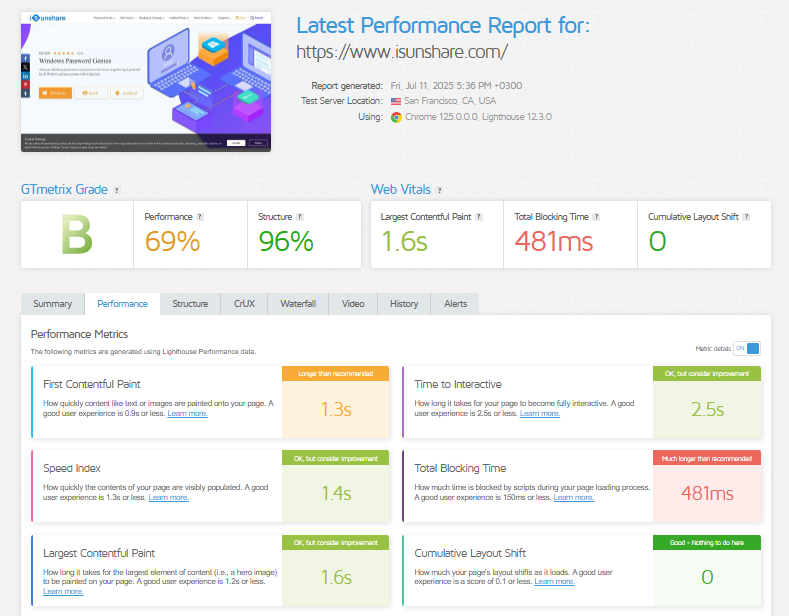
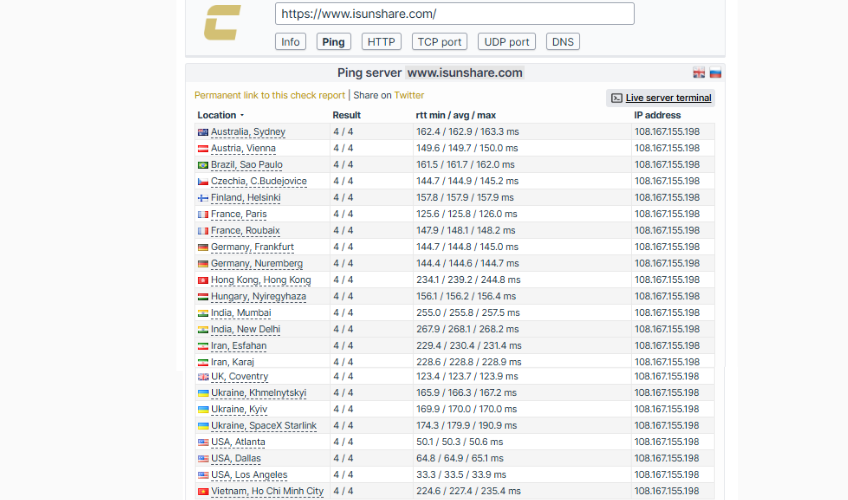
Regarding loading speed, GT Metrix scored the provider at 1.6s, while Google’s PageSpeed Insights showed 1.4s. That’s impressive, especially given the heavy content on the test site.
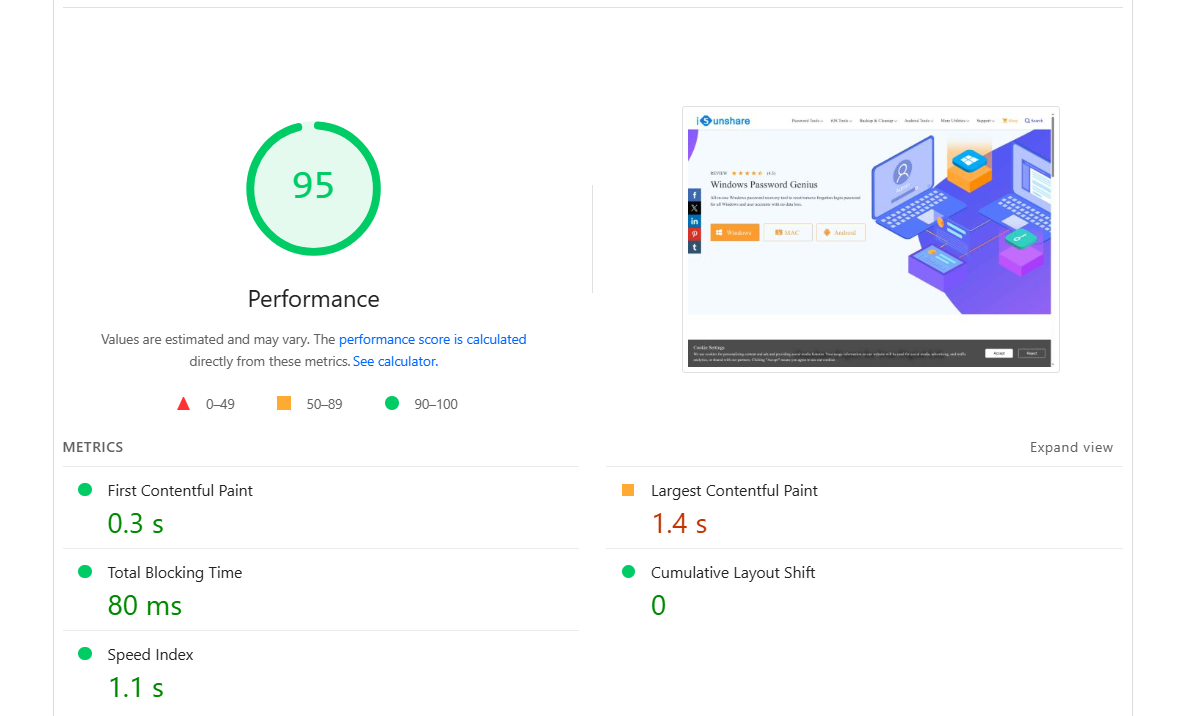
CheckHost’s ping test showed that the fastest loading time of 33.5ms was in Los Angeles, the USA, with Atlanta (50.3ms) and Dallas (64.9ms) not far behind.
Bluehost delivers great response times in the U.S., but ping times in other regions sometimes go over 100–200ms. That means international visitors might experience slower load times unless a CDN is in place.
InMotion Uptime & Speed Test
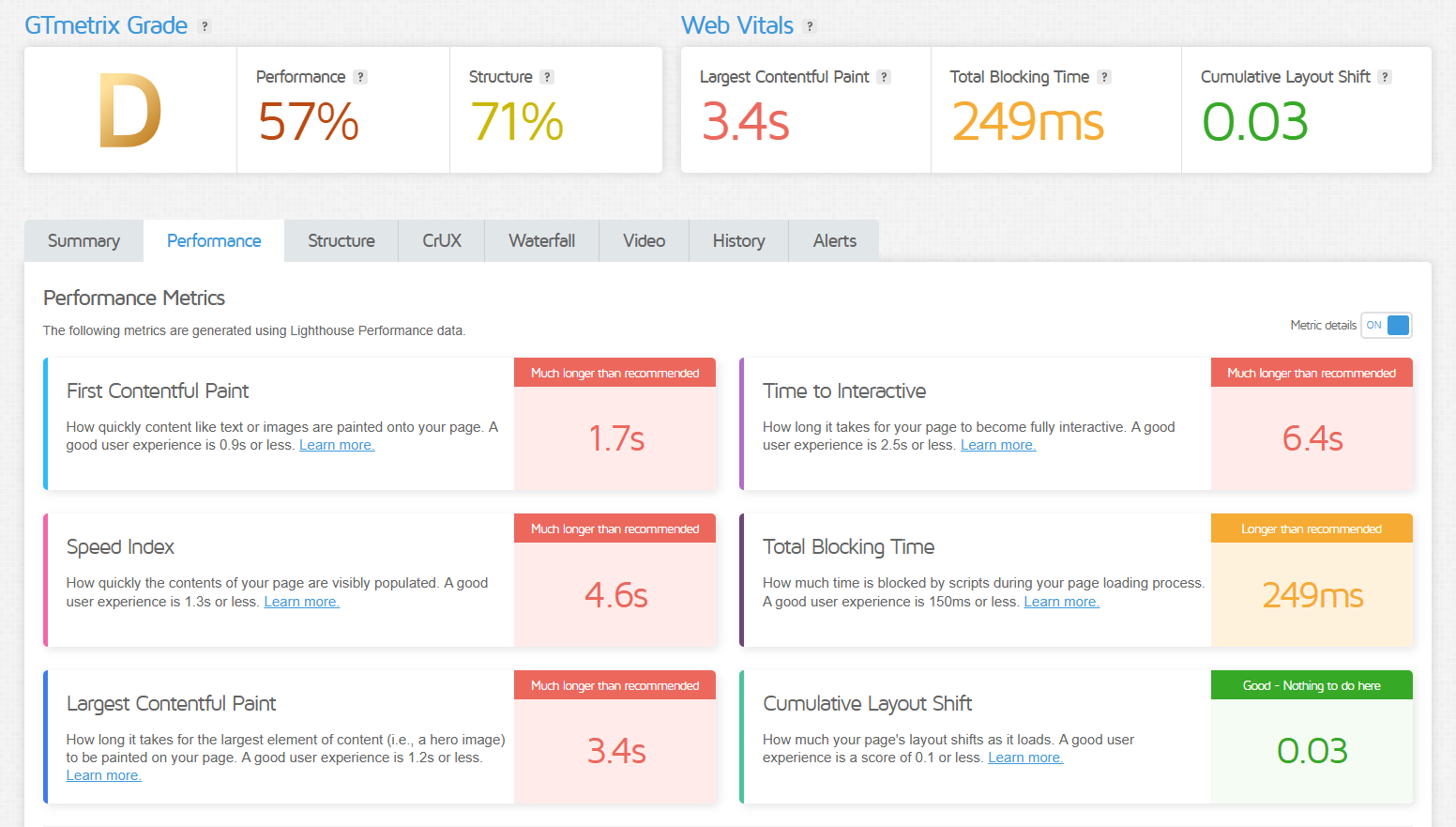
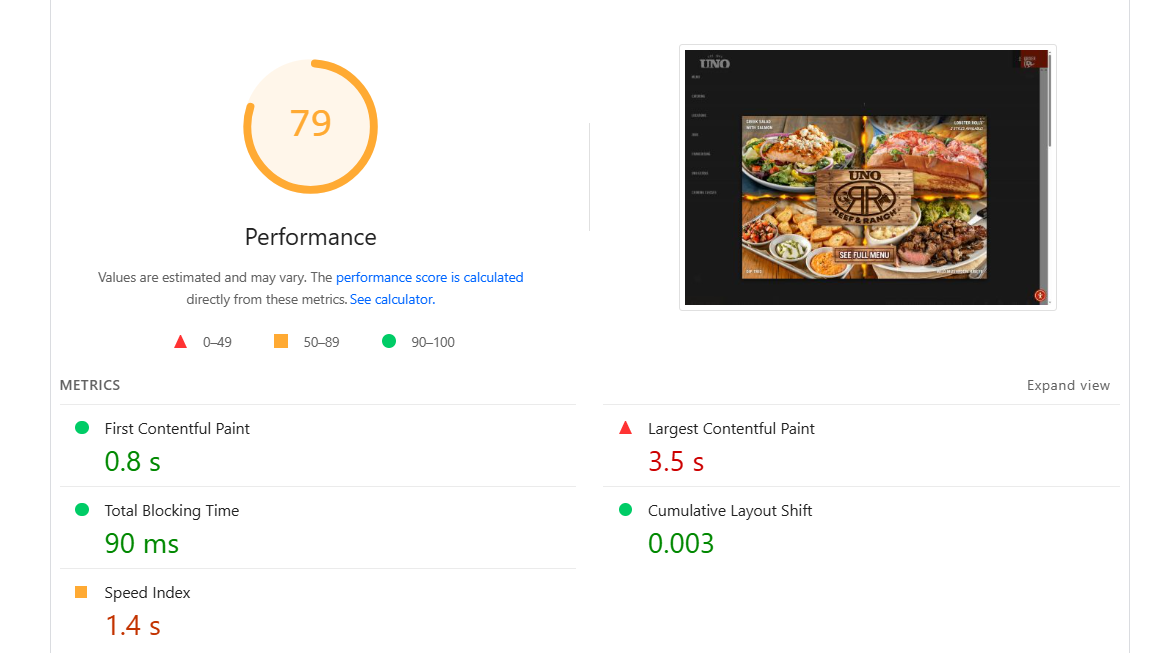
InMotion offers 99.99% uptime, a slight improvement over the industry standard of 99.9%. According to GTmetrix, its loading speed was 3.4s, which is slightly slower than recommended.
Google’s PageSpeed Insights showed a similar result at 3.5s, which is still decent for most websites.
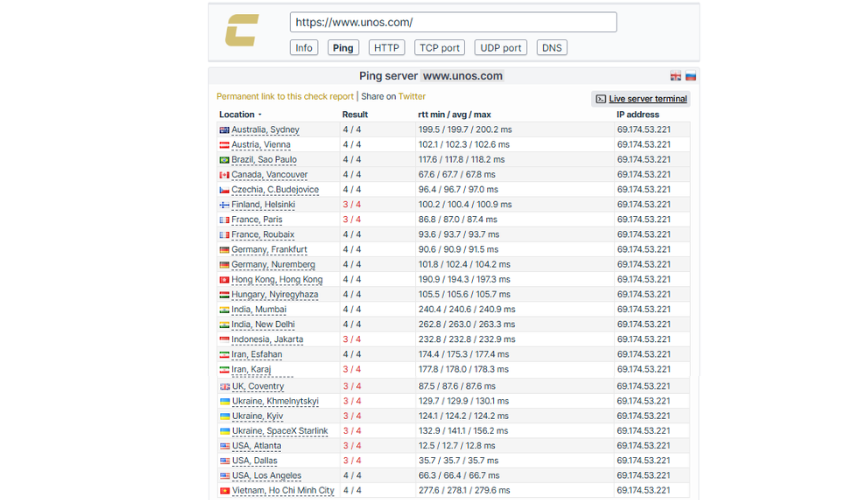
Checkhost’s ping test shows the server performs very well in the U.S., with ping times as low as 12.7ms in Atlanta and under 70ms in Dallas and Los Angeles.
The server delivers excellent speeds across North America and solid performance in Europe. Still, users in Asia, the Middle East, and other distant regions may face slower load times without a CDN in place.
4. Customer Support Comparison: Who’s Got Your Back?
Support quality can make or break your experience. Here’s how Bluehost and InMotion compare.
Bluehost Customer Support
Bluehost offers live chat and phone support. I tried the live chat from their homepage, picked my issue, and was connected to an agent named Joel.
I asked about uptime for shared plans since it wasn’t listed online. The agent took a bit to reply but gave a clear, accurate answer. Overall, the experience was smooth, friendly, and helpful.




InMotion Customer Support
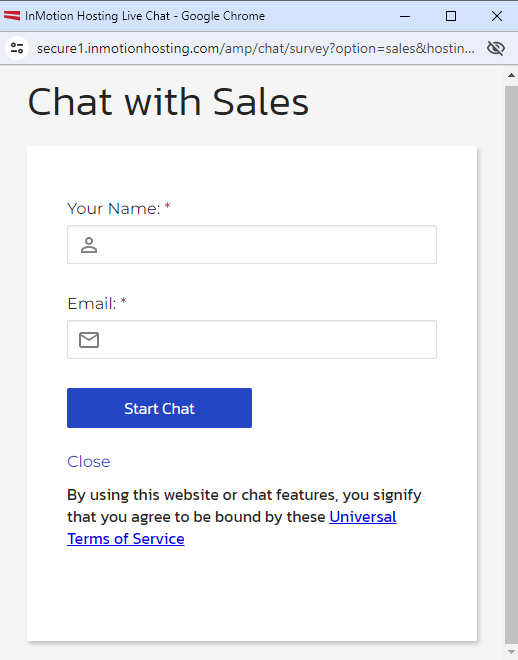
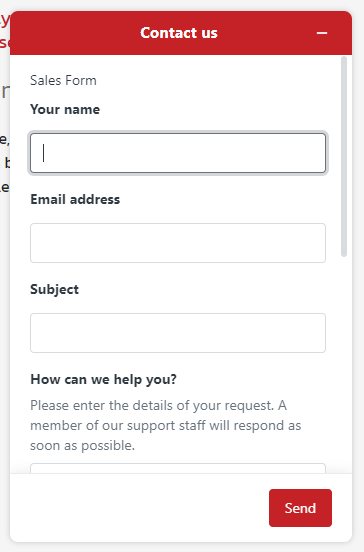
InMotion offers several ways to get support. I tried their live chat from the homepage, which opened in a separate pop-up, unlike most providers that keep chat within the same window.
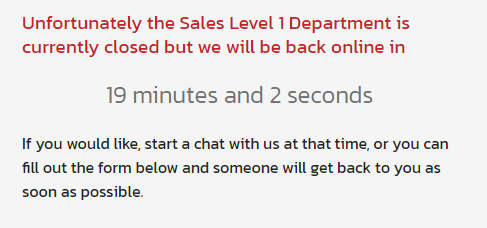
After entering my name and email, I got a message saying the Sales Level 1 team was closed and would return in 20 minutes.
I closed the chat and waited, but when I tried again, the same message appeared, this time without an estimated return time.
5. Ease of Use Comparison: Which Platform Is Easier to Use?
Managing your website should be simple. Here’s how Bluehost and InMotion make it easy in their own ways.
Bluehost Ease of Use
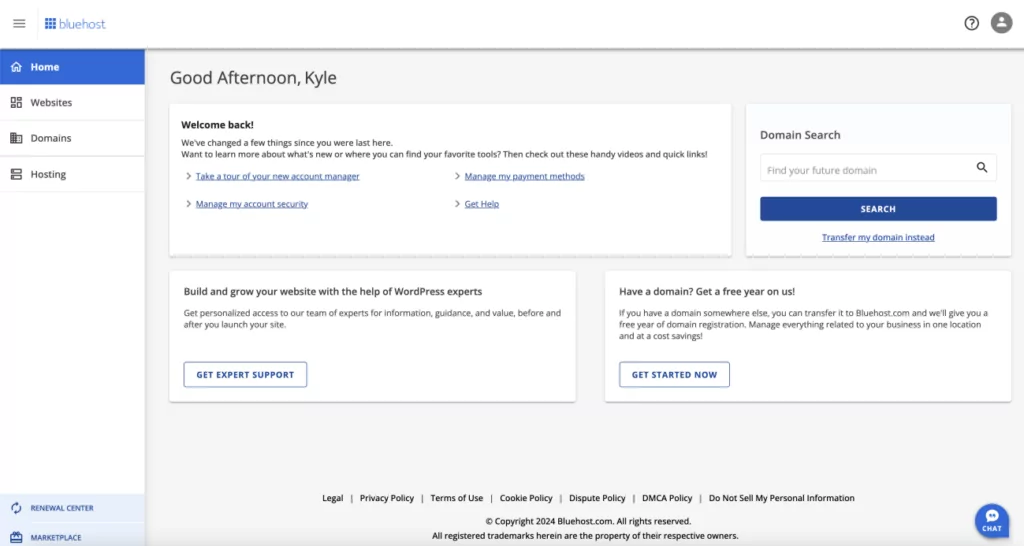
Bluehost makes hosting easy and quick. Setting up a WordPress site and adding features like WooCommerce is straightforward. It also supports other CMS platforms like Joomla and Drupal, which you can install through your Bluehost Account Manager. From the dashboard, you can create a new WordPress site or migrate an existing one.
You can edit your site, add more websites, and fix installation issues easily. Plus, Bluehost lets you add third-party themes and plugins to customize your site’s look and features.
If you run into problems, just click the chat button at the bottom right to reach support, or check out their knowledge base for helpful guides and some common questions.
InMotion Ease of Use
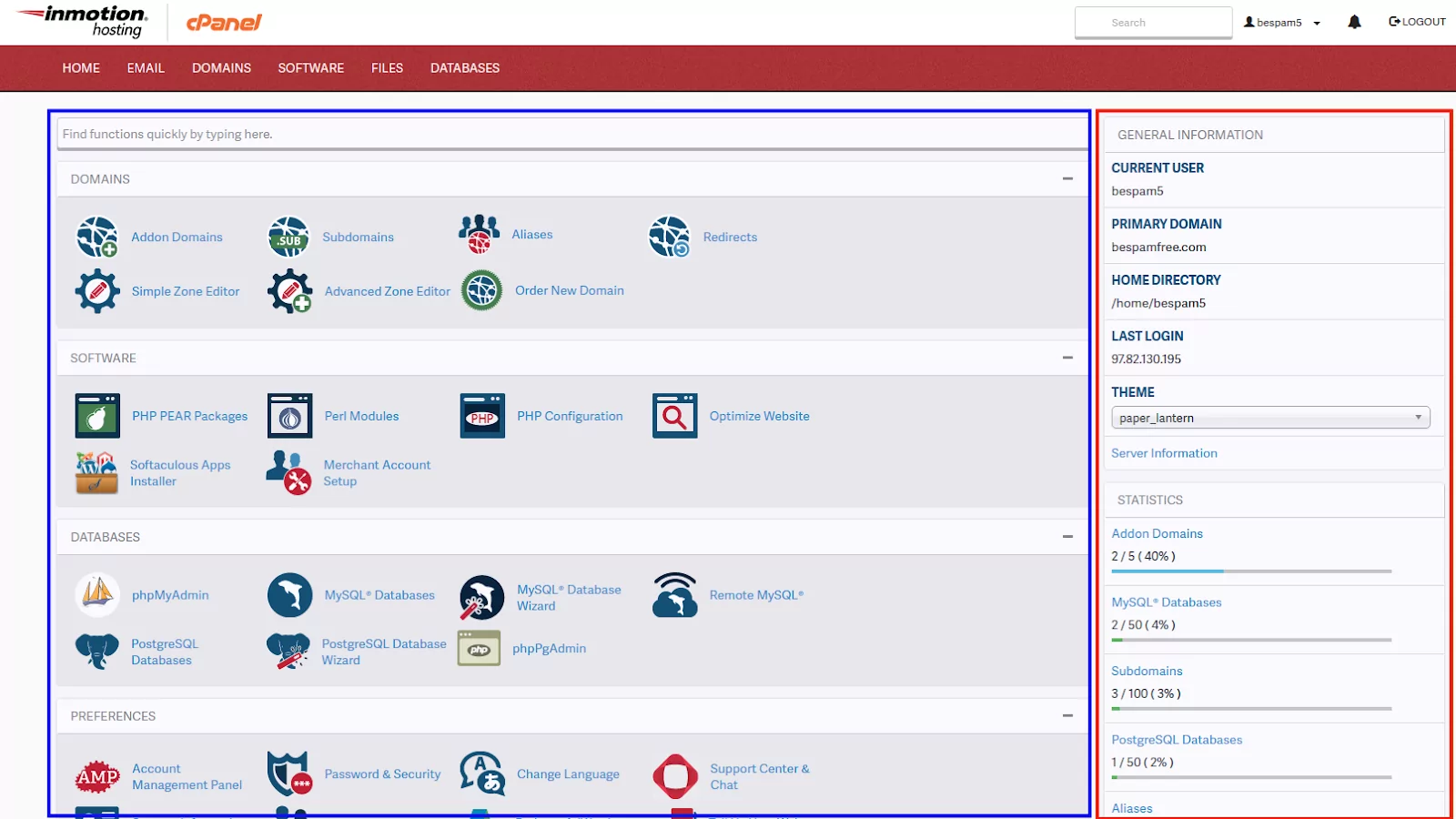
InMotion offers the popular, user-friendly cPanel to all customers, with other control panel options available too. cPanel makes managing your website, adding services, and setting up email accounts simple. You can install WordPress manually or use the Softaculous Apps Installer in the Software section.
At a glance, cPanel shows key info like disk space, email accounts, databases, and your shared IP. It’s organized into sections like Mail, Software, Files, and Databases for easy navigation.
If cPanel feels confusing, InMotion’s knowledge base has helpful video tutorials, and their support team is ready to assist.
6. Privacy and Security Comparison: Which Platform Is More Secure?
Let’s see how Bluehost and InMotion stack up when it comes to built-in security and privacy features.
Bluehost Privacy and Security
Bluehost includes free SSL and DDoS protection on all plans, but the BASIC plan’s SSL is free for only the first year.
Daily backups aren’t available on the entry-level plan, and the Web Application Firewall (WAF) is reserved for higher-tier plans.
Domain privacy is free for one year on all plans except BASIC, though users can add security features as add-ons if needed.
InMotion Privacy and Security
InMotion provides free SSL, automatic backups, DDoS, and malware scans on all plans, which gives consistent security and privacy across the board.
The only exclusive feature is a Dedicated IP, available on the Pro plan. Users can also enable Cloudflare and the Web Application Firewall (WAF) through cPanel.
7. Server Locations Comparison
Using server locations close to your target audience can offer faster loading speeds and a better user experience.
Bluehost Server Location
Bluehost’s main data centers are in Utah and Orem, USA. However, regional branches like Bluehost.in and Bluehost.ch provide data centers in the USA, the UK, China, and India.
InMotion Server Location
InMotion has three data center locations: the Los Angeles, California Data Center and the Ashburn, Virginia Data Center in the United States, and the Amsterdam Data Center in Europe.
Bluehost vs InMotion: Final Recommendations
Here’s a quick look at when to choose Bluehost or InMotion based on your needs.
Why Choose Bluehost?
Choose Bluehost if you want:
- An intuitive account management dashboard.
- Multiple data center location options.
- Affordable pricing with long-term plans that help you save more over time
- A WordPress hosting provider endorsed by WordPress.org.
- Fast, reliable customer support.
When to Consider InMotion
Choose InMotion if you want:
- Unlimited bandwidth and generous storage on a small budget;
- Robust, built-in security features across all plans;
- Fast-loading website speed;
- Excellent uptime;
- Popular control panels such as cPanel.
The Bottom Line
Bluehost comes out on top in this comparison, thanks to its faster speeds, broader global data center coverage, better ease of use, and WordPress.org endorsement. It also offers more accessible support and flexible hosting options for different website types.
While InMotion is a strong choice for users on a budget who want solid built-in security and control panel flexibility, Bluehost is the more well-rounded option for most users.

